Freddie Jackson Funeral: Melba Moore STUNNING Tribute Left Everyone in Tears
There are some voices in music that don’t just sing a song.
They shape entire eras of our lives.
For millions of people across the globe, Freddie Jackson’s smooth velvet croon was the soundtrack to late nights, deep romance, and unforgettable memories.
But behind that incredible talent was a story of pure hustle, deep church roots, and a life-changing friendship with a legendary Melba Moore.
When news broke that Freddie Jackson passed away, the world was stunned.
But nobody was ready for what Melba Moore did next when she stepped onto the stage.
She was the woman who saw something in Freddie before the rest of the world ever knew his name.
The emotional tribute from Melba Moore that left the entire world in tears.
If you grew up listening to R&B in the 1980s, you know that sound, that silky, effortless voice that could take a quiet room and fill it with pure emotion.
Freddie Jackson was a master at making you feel every single word he sang.
But long before he was filling arenas and collecting platinum records, he was just a kid from Harlem trying to figure out how to make his dream work.
Freddie came up in Harlem, New York.
If you know anything about Harlem back in those days, you know it was a place alive with culture, energy, and music around every corner.
But for young Freddie, his real musical training ground wasn’t the clubs or the street corners.
It was the church.
He grew up singing at the White Rock Baptist Church in Harlem.
That was his classroom, that was where he learned how to control his voice, how to project, and most importantly, how to sing from the deepest part of his soul.
In the gospel tradition, you don’t just sing notes, you deliver a message.
You move people.
Freddie absorbed all of that.
Every Sunday, he stood in that choir box, refining a gift that would one day touch millions.
Even back then, anyone who heard him knew there was something special going on.
He had a rich tone, a smooth range, and a warmth to his voice that felt instantly personal.
But moving from gospel choir member to a professional music career is a long, hard climb.
There are thousands of talented singers in New York, and breaking through that noise takes more than just a good voice.
It takes grit, patience, and the right break at the right time.
For a while, Freddie was doing whatever he could to keep his dream alive.
He was grinding away in local studios, singing on demo tapes, and taking odd gigs around the city.
He was working with a producer and songwriter named Paul Laurence.
Paul was a talented writer who was working on songs for different artists, and he needed a powerhouse vocalist who could record demo tracks so record executives and established stars could hear how the songs were supposed to sound.
Freddie stepped up and laid down those vocals.
He sang those demo tapes so well that people weren’t just listening to the songs, they were asking, “Who is that guy singing on the track?”
That was where fate stepped in.
At that time, Melba Moore was already a massive star.
She was Broadway royalty, a Grammy-nominated recording artist, and one of the most respected figures in Black entertainment.
Melba was a force of nature, blessed with a massive vocal range and an unforgettable stage presence.
She was working closely with Paul Laurence, looking for new material and fresh ideas for her projects.
One day, Melba was listening to some of those demo tapes Paul Laurence had brought over.
As the music played, this incredible voice came through the speakers, smooth, precise, full of passion, and completely effortless.
Melba stopped the tape.
She didn’t just hear a background singer or a demo vocalist.
She heard a star.
She asked Paul, “Who is this?”
Paul told her about Freddie Jackson, this young guy from Harlem who was working hard and looking for his big break.
Melba knew talent when she heard it.
She was someone who had already navigated the music industry through all its highs and lows, and she knew how rare a voice like Freddie’s really was.
She didn’t hesitate.
She wanted him in her inner circle.
She invited Freddie to join her touring group as a background vocalist.
For Freddie, that was the door opening.
Stepping onto the stage as a background singer for Melba Moore meant getting a front-row seat to the big leagues.
Night after night, Freddie stood on stage behind Melba, watching how a true professional handled an audience.
He watched how she worked the crowd, how she managed her vocal energy, how she held herself off stage, and how she ran her business.
It was a tough environment.
Touring isn’t glamorous when you’re starting out.
It’s late-night bus rides, early-morning soundchecks, bad food, and constant travel.
But Freddie never complained.
He was grateful for the chance, and he put his full heart into backing up Melba.
And whenever Melba gave him a moment in the spotlight, maybe a quick step forward during a duet or a high-energy vocal run, the audience took notice.
People could tell that the man backing up the queen had a royalty-level talent of his own.
What made their connection so special right from the start was that Melba didn’t look at Freddie as just an employee or hired help.
She didn’t feel threatened by his gift.
Instead, she took him under her wing.
She became a mentor, a big sister, and a champion for him.
She spent time talking to him about the industry, helping him build his confidence, and assuring him that he wasn’t meant to stay in the background forever.
She kept telling him that the world needed to hear what he had to offer as a solo artist.
Freddie listened and absorbed everything she taught him.
That bond, built on mutual respect and shared love for music, laid the foundation for everything that came next.
Without Melba’s sharp ear and her belief in him during those early Harlem studio days, the world might never have known the legendary Freddie Jackson we all came to love.
When you have a voice like Freddie Jackson’s, you can only stay in the background for so long.
By the mid-1980s, everyone around him, especially Melba Moore, knew that his time in the shadows was over.
But in the music industry, having raw talent is only half the battle.
You need someone in your corner who has the leverage, the connections, and the determination to get record label executives to pay attention.
Freddie had all the vocal ability in the world, but Melba was the force that made sure the corporate doors actually opened for him.
Melba didn’t just tell Freddie he was ready.
She actively took charge to make his solo dream a reality.
She went directly to the executives at Capitol Records, the iconic label she was signed with at the time.
She didn’t mince words.
She told the head of the R&B division that they had a future superstar sitting right under their noses.
She brought in the demo tracks he had recorded with Paul Laurence, including an early version of what would become his massive signature song, Rock Me Tonight (For Old Times Sake).
The label executives were stunned.
They heard the polished, soulful tone, the incredible control, and that effortless romance in his delivery.
Thanks to Melba’s unwavering recommendation and relentless advocacy, Capitol Records signed Freddie Jackson to a major solo recording contract in 1984.
It was a massive victory, but for Freddie, the real work was just beginning.
In 1985, Capitol released Freddie’s debut album, Rock Me Tonight.
To say the album was a success would be an understatement.
It was an absolute explosion.
The title track, Rock Me Tonight (For Old Times Sake), was released as the lead single, and it took over the airwaves almost overnight.
It spent an astonishing six consecutive weeks at number one on the Billboard Hot Black Singles chart and crossed over into the mainstream pop charts.
Suddenly, every radio station across the country was playing Freddie Jackson.
The kid from White Rock Baptist Church in Harlem had become an overnight national sensation.
The album went multi-platinum, yielding hit after hit.
Songs like You Are My Lady cemented his reputation as the undisputed king of romantic balladry.
You Are My Lady wasn’t just a hit song, it became a global anthem for love, proposal soundtracks, and wedding dances for generations.
It earned him his first Grammy nomination for Best Male R&B Vocal Performance.
Follow-up singles like He’ll Never Love You (Like I Do) and Love Is Just a Touch Away proved that Freddie wasn’t a one-hit wonder.
He was the fresh new face of a genre that was rapidly taking over the music landscape.
Quiet Storm.
The Quiet Storm radio format was all about smooth, late-night R&B, intimate lyrics, polished production, and vocals that could melt your heart.
Freddie Jackson became the ultimate voice of that movement.
Throughout the mid-to-late eighties, he dominated the charts in a way very few male vocalists ever have.
Between 1985 and 1990, Freddie scored ten number-one R&B hits and four platinum albums.
His second album, Just Like the First Time, released in 1986, continued his incredible streak with chart-topping smashes like Have You Ever Loved Somebody and Tasty Love.
If you turned on R&B radio in the late eighties, you were guaranteed to hear Freddie Jackson’s velvet croon within twenty minutes.
Yet, despite his massive solo success, filling grand arenas, and seeing his face on album covers across the globe, Freddie never forgot who helped him get there.
He never developed a swollen ego, and he never distanced himself from Melba.
In fact, his superstardom brought them even closer together as artistic equals and lifelong friends.
Instead of going their separate ways now that Freddie was a headlining star in his own right, Freddie and Melba decided to combine their superpowers.
They went into the recording studio together as duet partners.
In 1986, they released the powerful romantic duet, A Little Bit More.
The chemistry between them was undeniable.
You could hear the deep affection, mutual respect, and musical connection in every note they sang together.
The song soared straight to number one on the Billboard R&B charts, giving them both another massive hit and proving to the world that their bond was pure magic.
They didn’t stop there.
They continued to collaborate on tracks like I Can’t Complain and perform together on tour, sharing co-headlining marquee spots at major venues like the Apollo Theater in Harlem, the Paramount Theater in New York, and arenas across Europe and Japan.
Watching them share a stage was something truly special.
There was no competition between them, only pure joy.
Melba would beam with pride like a proud big sister every time Freddie hit one of his signature soaring high notes, and Freddie would look at Melba with visible gratitude, knowing he was sharing the stage with a woman who believed in him before anyone else did.
Behind the scenes, their friendship grew even deeper over the decades.
The music industry can be a cold, tough place full of people who take advantage of artists, quick trends that fade, and fickle fame.
But Freddie and Melba had an unbreakable shield because they had each other.
They became family.
They celebrated holidays together, leaned on each other during tough personal times, and supported each other’s careers through every shift in the music industry during the nineties and 2000s.
When music styles shifted toward hip-hop soul and modern R&B, Freddie stayed true to his classic vocal roots, continuing to tour globally, release independent music, and perform for audiences who cherished real, heartfelt soul music.
And through every single chapter, Melba was right there, a constant phone call away, a regular presence at his shows, and a forever anchor in his life.
Their bond was never about public relations or clever record label marketing.
It was built on real life, shared struggles, late nights on tour buses, shared meals, and a quiet, profound respect for the craft of singing.
They were two Harlem legends who had conquered the world together, standing shoulder-to-shoulder for over forty years.
Life has a way of slowing down even the brightest stars.
And as the years went on, Freddie Jackson began facing challenges far away from the bright lights and screaming crowds.
For decades, fans knew him as the ultimate picture of health and romance, a suave, impeccably dressed crooner whose voice seemed utterly ageless.
But behind that smooth exterior, Freddie was fighting a long, quiet, and exhausting health battle that he kept private for as long as he could.
In his later years, Freddie was diagnosed with chronic kidney disease.
Kidney disease is a silent, creeping condition.
It doesn’t happen overnight.
It gradually drains your body’s energy, affecting everything from your fluid retention to your stamina and vocal strength.
For a singer whose entire career relied on powerful breath control, soaring vocal resonance, and intense touring schedules, managing a chronic organ illness was an immense physical toll.
There were days when the fatigue was overwhelming.
There were hospital visits, medical tests, and strict dietary regimes that dictated his daily routine.
Yet, true to his Harlem roots and deep faith, Freddie rarely complained.
He didn’t want his audience to look at him with pity.
He didn’t want his health to become a tabloid spectacle.
When he stepped onto a stage, he wanted people to feel joy, romance, and comfort, not worry.
He threw himself into his medical treatments with the same discipline he applied to his vocal exercises, determined to keep living his life on his own terms.
As his condition progressed, Freddie made a brave decision.
Instead of hiding in the shadows, he decided to use his platform to speak out.
In 2024, Freddie went public about his ongoing health struggles, specifically bringing awareness to kidney health, diabetes, and wellness in the African-American community, a demographic statistically hit hardest by renal failure.
He spoke candidly about the importance of early detection, regular checkups, and listening to your body.
Fans across the world praised his courage.
Here was an R&B legend stripped of all the Hollywood gloss, standing before his audience as a humble human being trying to save lives through education.
Despite his health challenges, Freddie never completely gave up the mic.
Whenever he felt strong enough, he was back in the studio or performing intimate live sets.
Melba Moore remained his rock throughout this entire period.
She checked on him constantly, sending meals, making phone calls, praying with him, and offering the kind of steady, unconditional love that only a true soulmate in friendship can provide.
She knew how tough he was, but she also knew how much pain he was quietly enduring.
Then came October 2026.
Freddie had just celebrated his seventieth birthday on October 2nd.
For those who spoke to him around his birthday, he was in good spirits, expressing deep gratitude for seventy years of life, decades of music, and the endless love from fans worldwide.
But just days later, his health took a sudden, severe turn for the worse.
His body, weary from years of battling kidney disease, began to give out.
On October 5th, 2026, the devastating news broke across the world.
Freddie Jackson had passed away at the age of seventy in his beloved hometown of New York City.
The shock wave that hit the music industry was immediate and overwhelming.
Within minutes of the family’s official statement, radio stations across the United States suspended their regular programming to play a non-stop marathon of Freddie Jackson hits.
Rock Me Tonight, You Are My Lady, Have You Ever Loved Somebody, and A Little Bit More echoed through car speakers, living rooms, and city streets.
Social media was inundated with tributes from every corner of the entertainment industry.
R&B icons, hip-hop artists, radio DJs, and global celebrities posted photographs and memories of the man with a velvet voice.
Legends like Anita Baker, Alexander O’Neal, Stephanie Mills, and Stevie Wonder expressed their profound sorrow, calling Freddie one of the purest, most authentic vocalists of the twentieth century.
Fans shared personal stories of how his music was played at their weddings, how his ballads helped them get through heartbreaks, or how his songs were the background music to their parents’ lives.
For Melba Moore, the news was a devastating blow.
When the phone rang on that October morning and she was told that Freddie was gone, the world seemed to stand completely still.
This wasn’t just losing a fellow artist or a famous duet partner.
This was losing the young man who stood behind her in the studio forty years ago singing demo tapes.
This was losing her younger brother, her confidant, her protégé, and the person who shared some of the most beautiful moments of her life.
Melba was utterly heartbroken.
Friends and family recalled that she spent the first few hours in quiet grief, surrounded by photographs and memories of their four-decade journey.
They had traveled the world together, shared number-one records, celebrated birthdays, and weathered the brutal storms of the music business side by side.
Now, a massive piece of her life was gone.
As the world mourned the loss of an R&B giant, everyone wondered how Melba would handle such a tragic loss.
How do you say goodbye to someone who was so deeply intertwined with your own soul and career?
The public waited respectfully, knowing that when Melba was ready to speak, her words would come directly from the heart.
When news of Freddie Jackson’s passing hit the public, a quiet sadness hung over the world of music.
Millions of fans were playing his records, remembering where they were when they first heard You Are My Lady or Rock Me Tonight.
But everyone was waiting for one specific voice to speak.
Everyone knew that no one shared a story, a history, or a bond with Freddie quite like Melba Moore.
She wasn’t just his contemporary.
She was the woman who pulled him out of the background choir, stood by his side at Capitol Records, and shared some of the most iconic duets in R&B history with him.
For days following October 5th, Melba stayed out of the public eye, grieving privately, surrounded by her closest friends, family, and decades of shared memories.
But Melba knew she couldn’t stay silent forever.
She owed it to Freddie, to his family, and to the millions of fans who loved him to honor his memory in a way that only she could.
When she finally stepped forward to issue a statement and perform a live musical tribute in his memory, the entire world stopped to listen.
It wasn’t a standard corporate press release or a quick post written by a publicist.
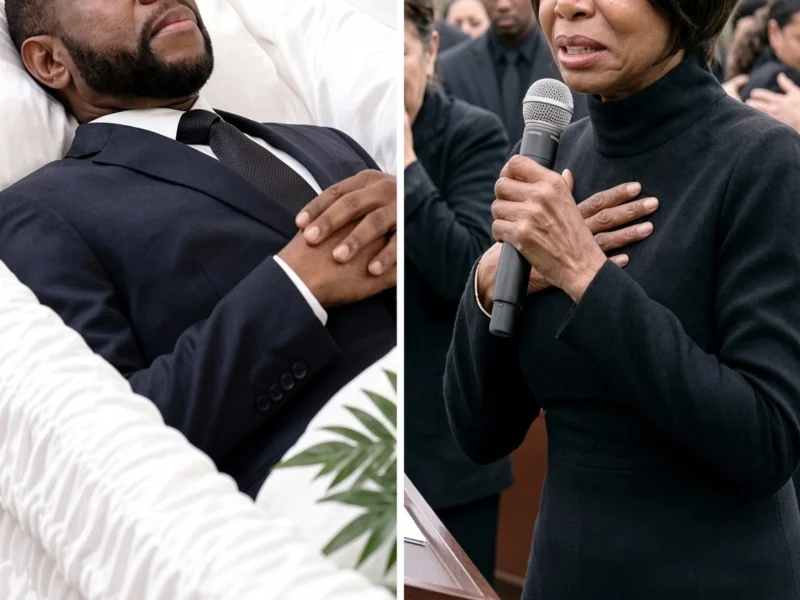
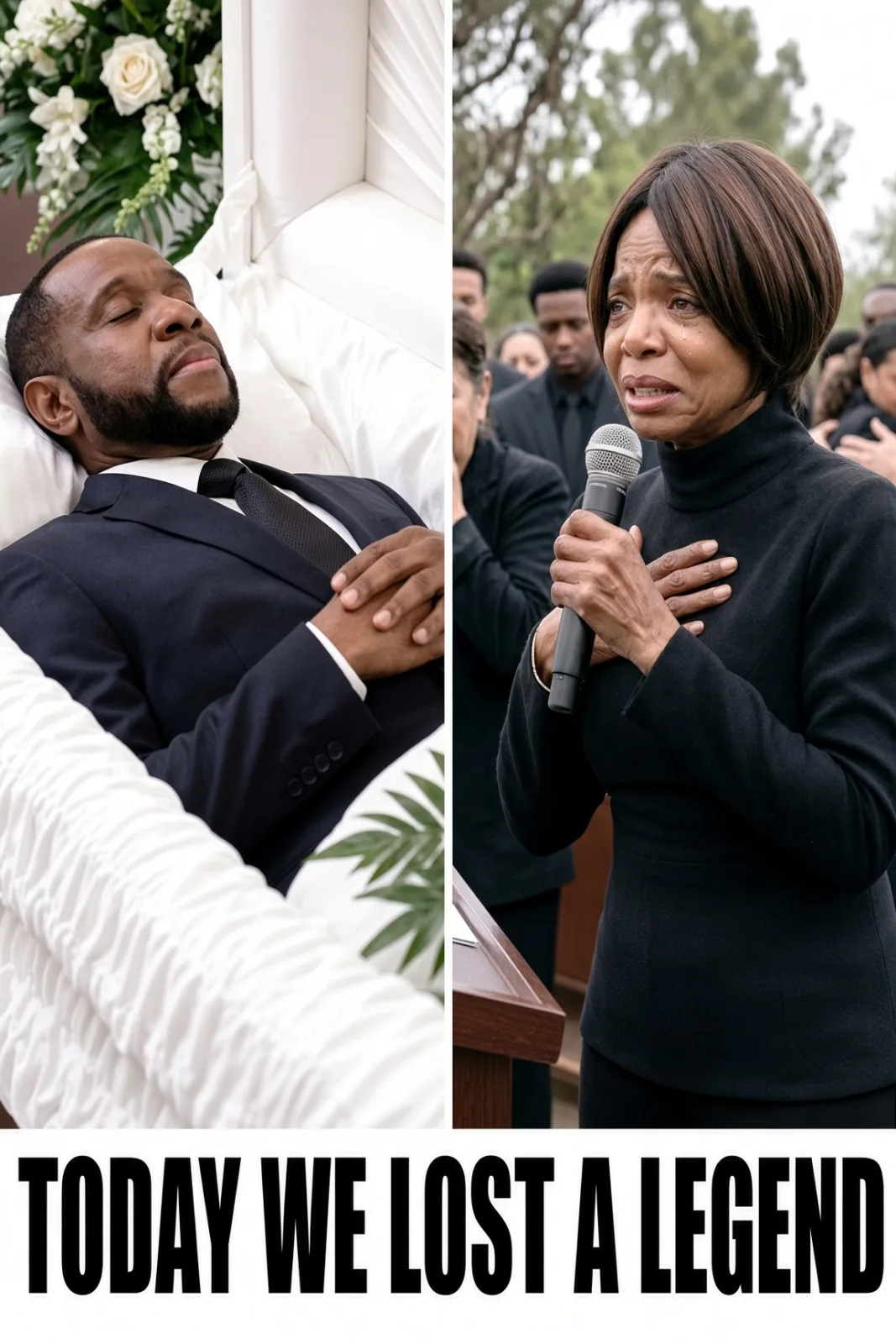
Melba chose to speak directly to the public from the heart, stepping onto a stage lit by low, warm lights, holding a microphone just like she and Freddie had done together thousands of times before.
When she walked out, dressed in simple, elegant black, you could hear a pin drop in the hall.
The room was filled with fellow artists, longtime fans, industry legends, and journalists, all feeling the heavy weight of the moment.
Melba took a deep breath, looked out into the crowd, and spoke about Freddie with a mixture of immense pride, deep love, and heartbreaking sorrow.
“When I look back on my life,” Melba began, her voice soft but completely clear, “there are moments that defined my career. But the day I heard a young man named Freddie Jackson singing on a cassette tape in a New York recording studio was a day that changed my life forever. I didn’t hear a background singer on that tape. I heard a giant. I heard a voice so pure, so honest, and so deeply anointed that I knew right then and there the world was never going to be the same once they heard him.”
She went on to describe those early days back in Harlem and on the road in the mid-1980s.
She spoke about what it was like having Freddie stand behind her on stage during her tours back when he was still learning the ropes of show business.
She brought smiles and light laughter to the sorrowful room as she recalled his sharp humor, his infectious laugh, and his incredible work ethic.
“Freddie was a gentleman,” Melba shared, smiling through her tears. “He was raised in the church, and he carried that church upbringing into everything he did. He treated everyone with respect, from the head of the record company to the crew sweeping the stage after the show. When we were on the road, late nights on tour buses, eating cold food at three in the morning, Freddie never lost that infectious smile. He’d break into a gospel song or make a joke that had the whole bus laughing until our sides hurt. He had a heart that was just as smooth and warm as his voice.”
Melba spoke about watching Freddie break out into global superstardom in 1985 with Rock Me Tonight.
She described the pure joy she felt seeing him take the number-one spot on the charts and holding it week after week.
For many established artists, a former background singer outshining or eclipsing them could create jealousy or tension.
But Melba explained that seeing Freddie succeed was one of the proudest achievements of her entire life.
“When Rock Me Tonight blew up, people asked me if I felt left behind,” Melba told the audience. “I told them, are you crazy? That’s my baby brother out there. That’s my friend. I didn’t want to hold him back. I wanted the whole world to see what I saw in him from day one. Seeing Freddie step into his light and become the king of Quiet Storm, that was proof that real talent and a good heart can still win in this world.”
Then Melba spoke about their legendary duets, particularly A Little Bit More.
She reminisced about being in the recording studio together, stepping up to the microphone side by side, and feeling a natural musical harmony that couldn’t be taught or rehearsed.
“When Freddie and I sang together, we didn’t even have to look at each other to know where the other was going,” she said. “We didn’t compete. We blended. He knew my voice and I knew his. Singing with Freddie was like sitting in a living room with family. You didn’t have to try hard. You just let the music flow. He made me a better singer every time he stood next to me.”
As her speech continued, Melba addressed Freddie’s final years, his quiet, courageous battle with chronic kidney disease, his determination to raise awareness for health in the community, and how he never let his illness dim his spirit.
She spoke about their last conversations, sharing that even toward the end, Freddie was thinking about music, thinking about his fans, and expressing gratitude for the life he lived.
“Even when he was tired, even when his body was fighting a heavy battle, Freddie’s spirit was untouched,” Melba said softly. “He told me, Melba, God gave me a voice to bring love into this world. And as long as I have breath, I’m going to keep spreading that love. And he did, right up until the very end.”
After finishing her spoken tribute, Melba turned toward the piano player sitting on stage.
The room went completely silent as the first gentle chords of A Little Bit More began to echo through the space.
It was an emotional, breathtaking moment.
Melba stepped up to the microphone to perform the song solo, honoring her late partner.
As she sang her verses, her voice carried a profound mix of power and grief.
But when it came to Freddie’s verses in the duet, Melba didn’t sing over them.
Instead, she stood quietly under the spotlight, closed her eyes, and let Freddie’s recorded vocals play through the speakers.
Hearing Freddie Jackson’s iconic silky voice fill the hall alongside a tearful Melba Moore left practically every person in the audience weeping.
Melba harmonized gently with his recorded tracks, lifting her hand toward the sky, singing to her dear friend one last time.
It was a stunning, powerful farewell, a masterclass in love, honor, and artistic devotion that instantly went viral across the globe, stunning fans and artists alike with its raw emotion.
Melba concluded the performance by looking up and saying three simple words.
“I love you, Freddie.”
Freddie Jackson’s passing marks the end of an era for R&B music, but the legacy he built over four decades remains unshakable.
From his early days singing gospel in Harlem to dominating the Billboard charts, defining the Quiet Storm era, and inspiring millions of lovers around the world, Freddie proved that true soul music is timeless.
And through his immortal recordings and the enduring love of Melba Moore, the woman who believed in him before anyone else, Freddie Jackson’s voice will continue to warm hearts for generations to come.
The microphone was the thing, and the thing was the microphone, and the microphone was a silver stand on a stage where a woman in black closed her eyes and let a dead man’s voice sing his own verse while she lifted one hand toward the sky.
The microphone was the thing.
The microphone is always the thing.