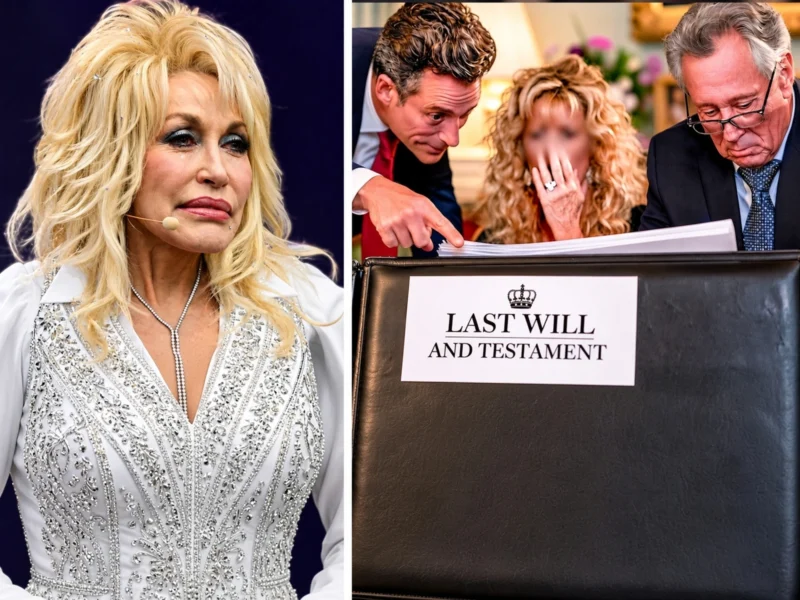
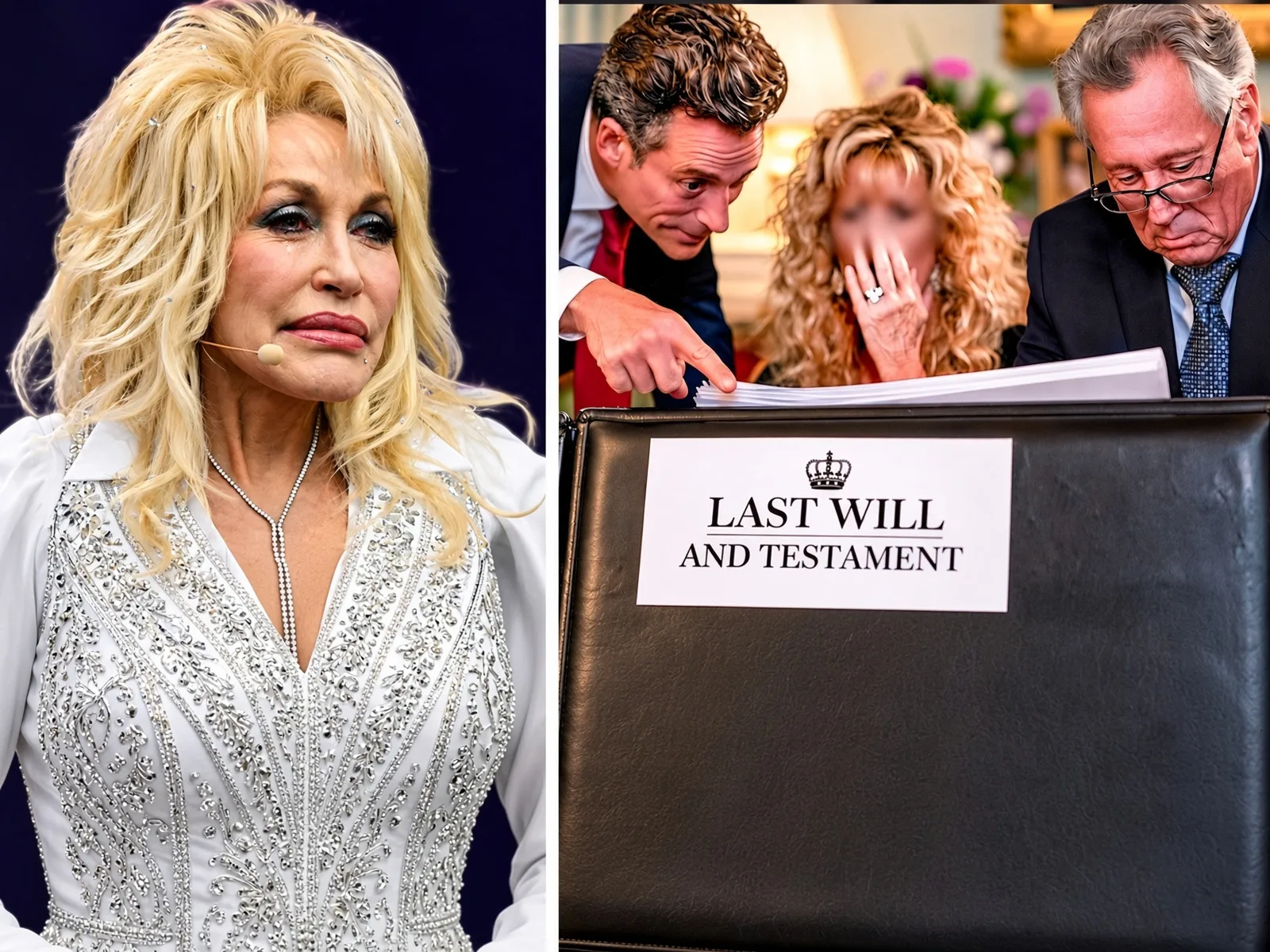
Dolly Parton’s Family STUNNED As Lawyers Reveal Who Gets What She Never Gave Them!
Dolly Parton died peacefully in Nashville on August 25, 2026. She was 80 years old.
The world mourned. Artists, fans, and ordinary people who grew up on her voice all felt the loss.
Representatives later confirmed she died after a brief battle with cancer. Her sister Stella said Dolly kept her illness private because she didn’t want her fans sad or worried.
Then a very different story started circulating online.
It says a team of lawyers gathered in a closed conference room in Nashville, with a sealed file in the middle of the table. It says what was inside changed how everyone in the room saw Dolly.
Before we go any further, a fair warning. That scene comes from one video, and I could not find any news report confirming it. Treat what follows as the video’s version of events.
The video makes a bold promise. It says the most powerful thing Dolly ever owned was not her music catalog, her theme park, or her publishing rights.
It says it was the word “no.”
Keep that word in mind. It comes back twice.
The video starts with a point that is well documented. Dolly Parton was generous.
She funded literacy programs for children. She helped her community recover from disasters. She gave without needing credit.
But the video says there was another side to her, one her closest associates understood. She never gave away what truly mattered.
She protected her songs, her name, her image, and her copyrights, and she did it long before most artists of her generation understood why it mattered.
Then it tells the story everyone knows.
When Elvis Presley wanted to record “I Will Always Love You,” his manager, Colonel Tom Parker, reportedly wanted a big share of the publishing rights. A deal like that could have been a career-defining moment for a young songwriter.
Dolly refused. She said no to Elvis Presley.
The video calls it a lesson in ownership. In its telling, the moment she let someone take a share of her song in exchange for temporary fame, she would be selling her legacy instead of building it.
That story is widely told, and it fits the video’s theme perfectly. It is also the only part of the video’s backstory that rests on well-known history.
Now for the part that does not.
The video says Dolly had been planning for her death for years. Her team did confirm she helped design a road map of projects that would continue after her passing.
But the video claims there was a second, secret road map. It says this one was about power, specifically who would hold it, who would lose it, and why.
According to the video, it lived in what staff called “the red file.” That was a red leather briefcase in a private office, used only for sensitive meetings.
Over the years, the video says, she kept adding to it: will amendments, notes from lawyers, rules about unreleased recordings, limits on photographs, and instructions about family materials.
Inside, it says, was a sealed envelope with three words in black ink across the front.
“Do not divide.”
That’s the first mention of the red file. Again, it’s the video’s claim, with no outside source.
The lawyers, the video says, didn’t open the envelope right away. They started with a document dated May 18, 2021.
It describes an amendment creating something called the Parton Music Creative Preservation Trust. The video says it split her estate into three categories.
The first was commercial assets, the machinery that earned money. The second was charitable commitments, the programs she built to serve others.
The third was different, and the video says it silenced the room. These were protected creative assets, including unreleased songs, private demos, handwritten lyric books, personal letters, family recordings, unfinished stage ideas, and private photographs.
Some could be licensed. Some could be displayed. But under no circumstances, the video says, could any of it be split among heirs.
Why would that matter, if the family loved her?
The video’s answer is human nature. One person sells a letter, another licenses a demo, someone else objects to a documentary. Within a generation, the archive would no longer be whole.
Dolly, it says, had watched that happen to other legacies.
Then the video introduces its biggest plot point, a role it calls the “senior guardian.”
The guardian, it says, would not own her assets or run Dollywood. But if a dispute touched her private materials, her image, or her unreleased work, the guardian’s objection could stop everything.
The video says Dolly refused to tell anyone who she had picked. Her family kept asking over the years, and she would change the subject.
Then, it says, Carl Dean died.
That part is true. Dolly and Carl were married for nearly 59 years, and he died in March 2025. He was famously private, and he stayed out of the spotlight while his wife became one of the most famous women in the world.
The video says his death forced her to rethink her plans. According to the story, she rewrote the succession section, removed the shared arrangement, and chose one person alone.
It adds one more condition. The person’s name could not be revealed while she was alive.
The video says she did that on purpose. She wanted to see how people reacted when they didn’t know.
Then it moves to a topic with real-world weight, her digital identity.
The video says her will contained detailed limits on artificial replicas of her. No performance built entirely by software could be released without approval, and no company could use old recordings to create a “new” song she never made.
No digital avatar, it says, could headline a tour just because the technology allowed it.
The video lays out why. A physical archive is finite. A digital version of her could generate songs, ads, and interviews forever, and never get tired or say no.
Dolly’s answer, the video says, was a single word.
“No.”
That’s the second time.
Next, the video stages a courtroom-style showdown, still inside that conference room.
It says one lawyer questioned the timing of her decisions. Carl had just died, she’d had health problems, and she was grieving. Should changes made then outweigh what the family had expected for years?
The video says Dolly’s lawyers didn’t argue. They opened a black-covered file.
Inside, it says, were witness signatures, independent legal certifications, recorded confirmations of her mental capacity, meeting logs, and a video statement she recorded herself.
They didn’t even play it. Producing it was enough.
The video then lists the consequences it says were built into the trust. Challenging the succession plan would trigger legal protections. Removing protected material would be challenged. Licensing her voice or likeness outside the trust would be blocked.
None of this appears in any news report I found.
At last, the video says, the envelope came open.
Inside was a single handwritten page. At the top, it says, were these words:
“My name is not an inheritance, it is a responsibility.”
The video says the page explained how she picked the guardian. Anyone who had pressured her for permanent control was removed from consideration.
Not because she doubted their love, it says, but because she didn’t want the job to go to the person who wanted it most.
Then the name appeared. According to the video, it was her younger sister, Stella Parton.
The video says nobody spoke. Then someone asked the obvious question.
“Why Stella?”
It says a longtime representative walked in with a small tape box. On it, the video says, was a private message from Dolly to the people in that room.
She talked, it says, about watching money change relationships and contracts turn friends into enemies. She had seen families torn apart over what loved ones left behind, and she didn’t want her songs to become weapons.
She chose Stella, the video says, not because Stella was perfect or the best with money, but because Stella remembered the family before there was anything worth fighting over.
Before Nashville. Before Dollywood. Before the platinum records.
Back then, the video says, there was a house in East Tennessee, 12 children, music, hardship, faith, and almost no money.
That detail is real. Dolly grew up poor in rural Tennessee as the fourth of 12 children, and Stella is the sixth.
The video says the tape ended with a line that changed the room.
“The guardian’s most important power was not the ability to approve something, but the courage to say no.”
That’s the third “no,” and the video’s emotional peak.
Then it adds a twist. The guardianship, it claims, was only temporary.
Stella wasn’t given permanent control. She was asked to guard the bridge to the next generation.
Under the video’s version, she, the professional administrators, and some younger family members would catalog the archive together. They would learn why certain songs were never released, why some letters stayed sealed, and why Dolly approved some projects and rejected others.
Only then could a younger committee take over. Blood alone wouldn’t be enough.
The video says even that committee would face permanent limits. Some recordings would never be released. Some letters would stay sealed for decades.
And one category carried a single word, it says.
“Never.”
The video then stages one last argument. A representative asks why valuable material should sit in a vault when streaming platforms might pay enormous sums.
A lawyer, it says, pushes Dolly’s signed directive back across the table. The trust wasn’t built to maximize revenue, he says. It was built to protect consent.
The video says her index marked certain items with a small handwritten star. A star meant protected from any change. No family vote, no offer, no future trustee could quietly reclassify it.
The video adds one more feature. Anyone who tried to sell or license protected material outside the trust could lose future discretionary payments tied to the archive.
In the video’s words, she built a firewall. The easiest way to benefit from her legacy was the same path required to protect it.
Someone asks whether Dolly truly saw this coming.
The lawyer’s answer, the video says, was short. She anticipated human nature.
So where does this leave us?
On the record, the facts are clear and moving. Dolly Parton died on August 25, 2026, at 80. She was laid to rest next to Carl Dean, and she asked for a small, private funeral.
Her family asked fans to donate to her Imagination Library instead of sending flowers.
Reports also say she planned the music for her farewell and left a secret song for fans to hear in 2046. Her team has said the projects she planned will continue, including her Broadway musical.
Stella Parton has been speaking publicly about her sister. She described their weekly Tuesday morning coffee calls and said her sister was always thinking of others.
Stella also said Dolly was willing to let doctors try experimental drugs if it might help other people.
None of that needs a red briefcase.
The viral story is something else. It’s a dramatic retelling that fits a real pattern, because Dolly really did say no to Colonel Parker, and she really did spend a lifetime deciding what her name would mean.
But the sealed envelope, the star symbols, and the named guardian are claims from one video. Until a credible source confirms them, they’re best treated as storytelling.
The video’s closing message is still worth hearing.
It says the most valuable thing in her estate wasn’t the biggest asset. It was the right to decide.
And long before she died, the video says, she had chosen who would keep using it.
Whether or not that last scene ever happened, one thing is true. A woman who grew up with almost nothing built an empire, and she was famous for knowing exactly when to say no.