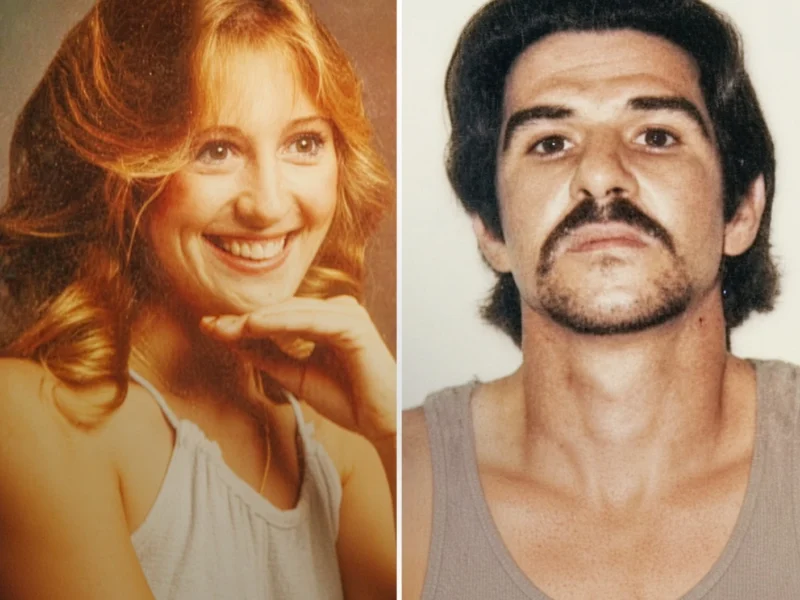
DNA From a Refrigerator Helps Crack a Murder Case | Cold Case Files
A quiet summer morning on the outskirts of Houston.
A pickup floats down a backwater stretch of road and approaches a train crossing.
A railroad worker is at the junction repairing a piece of track.
As the pickup cruises past, the worker hears a pop and feels a sting in his leg.
He’s been shot, and the pickup accelerates.
The drive-by shooting will never be solved.
It is, however, the first link to another case, a cold case of murder.
Two days after the drive-by shooting, Harris County Detective Marcel Dion tracks the pickup to the All Right car lot on Houston’s West Side.
“Upon running the license plate, the registration returned to All Right Motors and Michael Neil.”
Michael Neil is a local drug dealer and a suspect in at least one other drive-by shooting.
Dion is about to enter the car lot when he notices an odor emanating from a shed at the back of the property.
It’s the smell of a methamphetamine lab.
“At that point, I called for backup units, and as they arrived, they noted a strong presence of meth being cooked. So, therefore, we conducted an immediate search, and that’s where I met Tracy Jo Shine.”
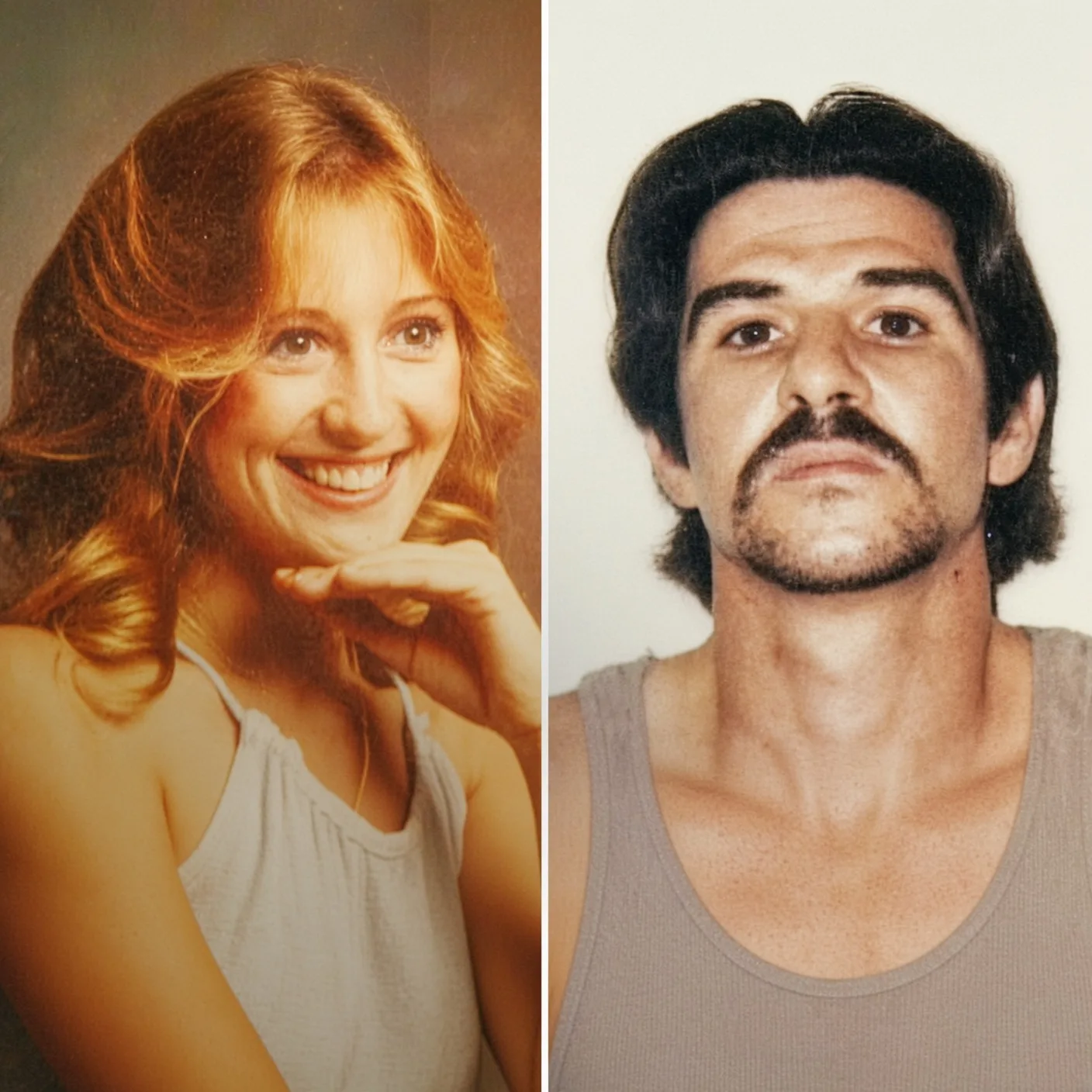
Tracy Jo Shine is Michael Neil’s girlfriend.
Dion books her on drug charges and then tries to turn her against Neil.
“Told her that I couldn’t help her on this case. She was going to be arrested and she was going to have to go to jail, but that if she helped me on the other two shootings that I was working on, that I would talk to the judge and tell her at least she helped us on the cases.”
Shine agrees to provide information that will implicate Michael Neil in the shootings.
The next day, Neil bails Shine out of jail.
The pair returns to Michael’s mother’s house at 7911 Mishawaka Street.
It is the last time Marcel Dion will ever see Tracy Jo Shine.
“She never called me back. I think it was about two weeks later was when I started getting calls from Marsha.”
Marsha is Marsha Bork, a friend of the Neil family as well as a Vietnam veteran.
“I can tell you what death smells like because I’ve been around enough bodies overseas, enough body bags, enough maggots eating the bodies out, that once you smell death, you never forget death.”
Bork tells Dion that Michael Neil has murdered Tracy Jo Shine in the house on Mishawaka Street.
Bork’s source is Neil’s mother, Barbara McAlister.
“And I asked Barbara, you know, had she seen the body? She said Michael went to the store. He was gone for about twenty minutes. And she said I was able to go see the body. I tried to wake up Tracy, but her body was purple, her toes were purple.”
McAlister tells Bork that Tracy Shine had lain dead in a bedroom upstairs for two to three days.
Then, according to Bork, McAlister claimed Michael Neil moved the body to an old refrigerator in the garage.
“She stated that Tracy’s body is in a refrigerator.”
At some point, according to Bork, Michael Neil called his brother Bobby to help get the body out of the house.
The two moved the refrigerator onto a truck and drove it to the All Right Used Car Lot.
“Then they placed a refrigerator in a pickup truck and took it out to a car lot on Jones Road, which happens to be the same exact car lot that the shootings came back to.”
Dion tells Bork that he needs more before he can conduct a search of the residence or the car lot.
Bork returns to the house on Mishawaka Street to obtain the evidence the detective needs.
“It was about maybe a week later she calls me and she said, ‘I’ve got something you’ve got to listen to.'”
“I just took a RadioShack tape with a microcassette, and I either placed it on my collar such as this, or I had a purse where I carried it in my purse.”
Working on her own, Bork secretly records a series of conversations with various members of the Neil family.
The tapes confirm Bork’s story and almost cost Bork her life when Michael Neil becomes suspicious.
“He just cold-bloodedly just pulls out a gun. He says, ‘I’m going to kill you. You know too much.’ The guy cocked the gun on my head. I said, ‘That’s what? Yeah. Do what you have to do.'”
Michael Neil does not pull the trigger on Bork.
Instead, she escapes with her collection of audio tapes and enough probable cause for Houston detectives to execute a search warrant.
On October 22nd, 1987, Detective Marcel Dion and his partner, Andy McCloud, descend on the All Right Used Car Lot.
In the back, they discover an abandoned refrigerator, the first tangible evidence that Marsha Bork’s gruesome story might actually be true.
McCloud is given the chore of opening it.
“I found a portion of skin about the size of a potato chip or so. It could have been a portion of her scalp. It could have been from skin slippage due to the body decomposition.”
In the days before DNA testing, the tissue is sent to the Houston police lab for typing and analysis.
Four days later, they return a report.
The sample came from a Caucasian female but cannot be definitively typed to Tracy Jo Shine.
Harris County detectives now feel certain that Michael Neil killed Shine and that this refrigerator served as her coffin.
In 1987, Harris County Jail is Bobby Neil’s home, where he awaits trial on drug charges.
On November 5th, Bobby sits down with the detectives.
He tells them how one day he helped his brother Michael move a refrigerator out of the house on Mishawaka Street.
“He came over and walked into the house, and he said he could smell a real foul smell there. There was a refrigerator laying on its side and it was all taped up. He asked Michael, you know, ‘What happened? What did you do?’ And of course Michael just made a motion and stated, ‘Shh.'”
Bobby and Michael moved the refrigerator to the All Right Used Car Lot.
Then Bobby says he and Michael took a trip to the local hardware store.
“They went to a local hardware store and picked up hacksaws and muriatic acid and cleaning solvents and returned back to the car lot. He claimed that he never actually saw the body inside the refrigerator because it was taped up. However, his part in it would be that he stood as lookout while his brother reportedly had cut her up.”
With no direct physical evidence and no eyewitnesses, Dion and McCloud lack the juice to charge Michael Neil, a man they now believe not only murdered Tracy Shine but dismembered her corpse.
In time, the investigation goes cold, but is not forgotten.
In May 1998, Harry Fikaris and Roger Wedgeworth form the Harris County Cold Case Squad.
One of the first files they open is that of Tracy Jo Shine, now cold almost eleven years.
“This is one of those cases that you just look at and you say, ‘How can anybody do something like this to a person and get away with it when everybody knows who did it and how it was done?'”
“We tried to pick cases that we felt we could be successful with, and this was one of them.”
On April 22nd, 1999, cold case detectives reopen the refrigerator.
Two evidence technicians, Robin Freeman and Sarah Katsounas, search for trace evidence.
“We actually started from the exterior. We looked at the exterior, and then we went from the inside and took out shelves, and we pulled wire housing out, bulb housings out, and everything that could be loosened. And that’s where we actually found some matter or debris that appeared to be tissue.”
The sample taken from the wire housing tests inconclusive for human blood.
The team tags it and sends it to a DNA lab outside Dallas, hoping they might have better luck.
GeneScreen is one of a handful of labs in the world qualified to conduct a genetic extraction process known as mitochondrial DNA testing.
On March 14th, 2000, Watson begins mitochondrial testing.
One week later, he gets a genetic reading and compares it to samples taken from Tracy Jo’s mother, Virginia.
The two samples match.
More than twelve years after she first disappeared, human tissue belonging to Tracy Jo Shine is positively identified as coming from inside Michael Neil’s refrigerator.
Steve Baldasano works for the Harris County DA.
In January of 2001, he prepares to prosecute Michael Neil for the murder of Tracy Jo Shine.
When Neil reviews the evidence against him, he decides to plead guilty anyway and is sentenced to forty-five years in prison for the murder of Tracy Jo Shine.









