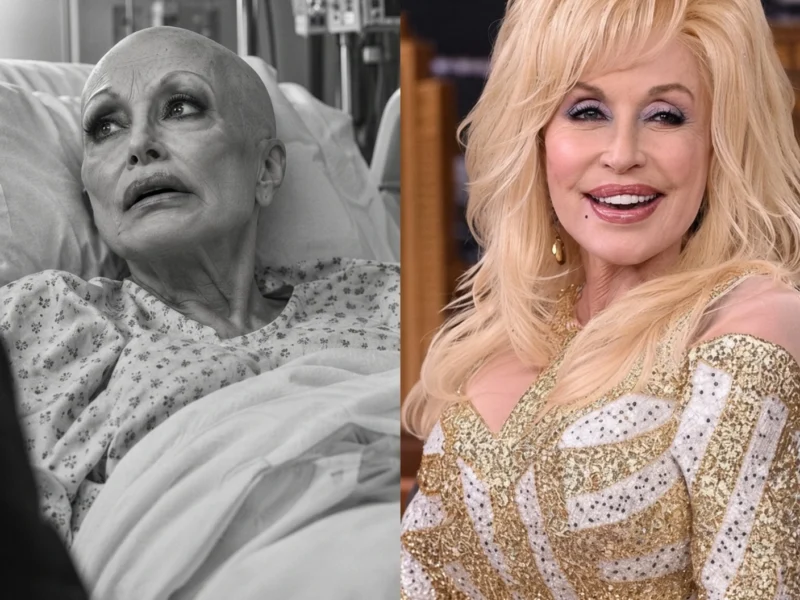
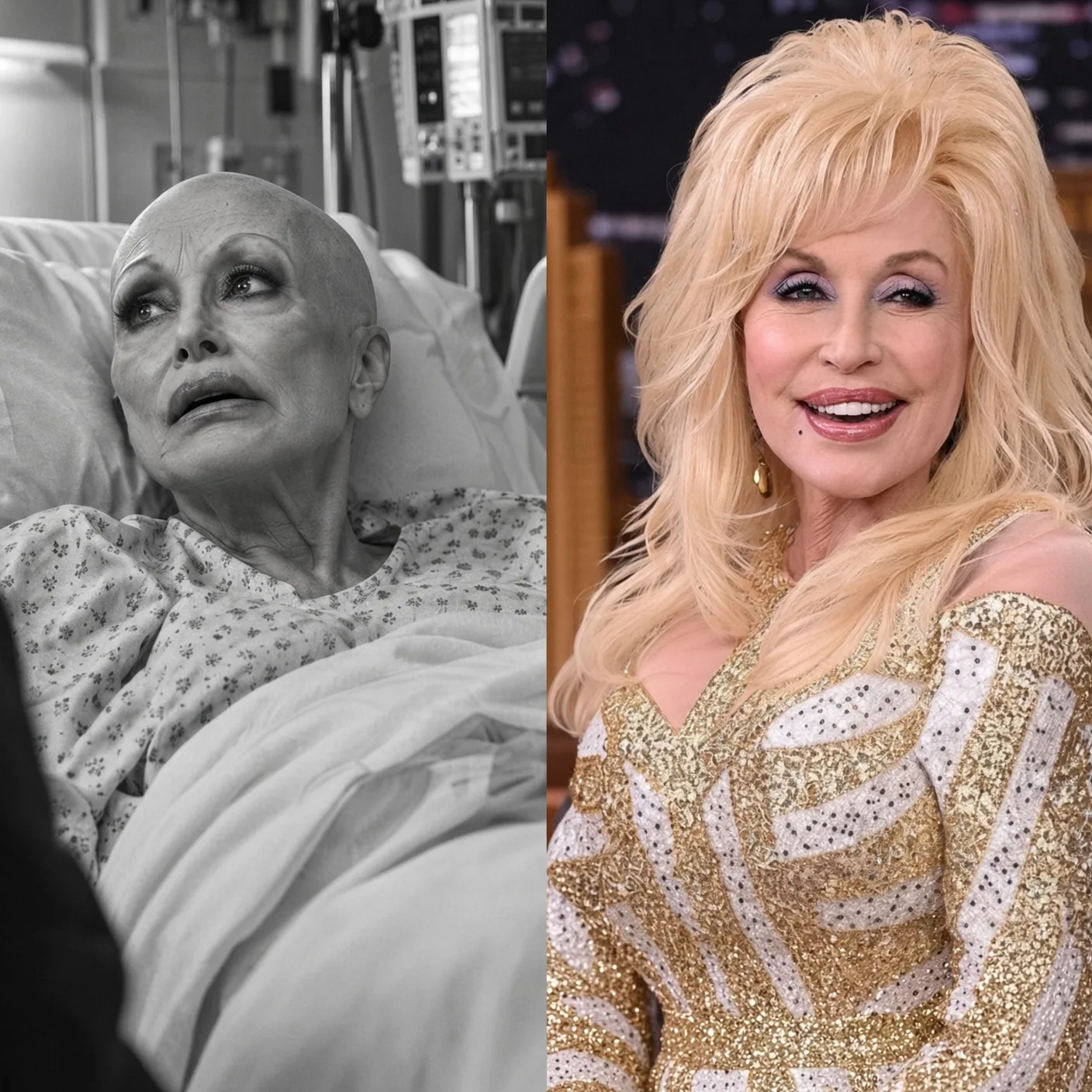
Cancer Didn’t Kill Dolly Parton. This Did
You know that feeling when you find out somebody you love has been protecting you from something terrible, and they did it so well that you didn’t even know you needed protecting?
That’s where we’re going today.
And by the time we get to the end of this, you’re going to look back at everything you thought you knew about the last year of this woman’s life and realize you were watching a master class in control, in dignity, and in love.
Because what happened in that final chapter wasn’t a tragedy that caught everyone off guard.
It was a performance, and not the kind you’re thinking of.
I’m talking about the kind where the performer knows the curtain is coming down, knows the exact moment it’s going to fall, and still walks out under those lights and gives you the show of a lifetime.
So stick with me, because the story you’re about to hear isn’t the one the headlines told you.
It’s the one hiding in plain sight in every smile, every joke, every carefully chosen word from a woman who understood something most of us never will.
That you don’t have to let the world write your ending.
You can write it yourself.
And she did every single word of it.
Now to understand how we got here, you have to go back to a day that looked ordinary on the calendar, but wasn’t.
September 17th, 2025.
There’s a theme park in the mountains of Tennessee with her name on it, her face on every gate, her fingerprints on every inch of that place.
And for forty years, she had shown up every major event, every opening day, every celebration.
It didn’t matter what was happening in her life.
She showed up.
She had performed through a house fire.
She had gone on tour with a broken foot.
She had buried her husband of fifty-eight years just six months earlier and still found the strength to keep moving.
That park was hers.
Not just her name on it.
Her soul in it.
So when a pre-recorded video played for the crowd instead of her walking out on that stage, people noticed.
But they believed her.
She said it was a kidney stone.
Said it had caused an infection.
Said she needed to rest.
And here’s the thing.
She had joked about kidney stones for years.
She once said doctors had pulled more stones out of her than a quarry pulls out of a mountain.
It was familiar.
It was embarrassing enough to feel true.
And it was small enough to feel manageable.
So the crowd went home satisfied.
But ask yourself this.
Would a woman who toured on a broken foot skip her own theme park for a kidney stone?
Would the woman who worked through a house fire sit out her own roller coaster launch because of an infection?
Something else was already happening inside her body on that September day.
She just wasn’t telling anyone what.
Eleven days later, the real scale of it started to surface.
On September 28th, she posted a statement that made people stop scrolling.
She was postponing her Las Vegas residency.
Six shows at the Colosseum at Caesars Palace.
Her first Vegas run in over thirty years.
All pushed from December 2025 to September 2026.
Her exact words were that she had been dealing with some health challenges and her doctors had told her she needed to have a few procedures.
Then she softened it with a joke about her hundred-thousand-mile checkup and said it wasn’t the usual trip to see her plastic surgeon.
Fans laughed and moved on.
But look at what she actually said.
Not one procedure.
A few procedures.
Multiple.
That’s serious enough to cancel the biggest live event of her late career.
That’s serious enough to make an eighty-year-old woman with a fifty-year work ethic stop working on doctor’s orders.
And still she wouldn’t name what she was dealing with.
Because the moment she named it, the story stopped being hers.
Then her own sister broke ranks.
The sister who saw it up close.
On October 7th, 2025, Dolly’s sister Frieda posted something nobody in Dolly’s camp had approved.
She asked fans to pray for her sister.
Said she had been up all night praying herself.
The internet did exactly what you would expect.
Within hours, Dolly Parton dying was trending.
Within a day, fans were writing goodbye messages and posting farewell tributes.
So Dolly got in front of a camera and cleaned it up herself.
On October 8th, she posted a video in full Dolly armor.
The wig, the makeup, the smile.
And she delivered the line everyone remembers.
“I ain’t dead yet. And I know lately everybody thinks I’m sicker than I am. Do I look sick to you? I’m working hard here.”
The comments flipped from panic to relief in about six hours.
Crisis managed.
Except Frieda wasn’t wrong.
She had seen something at close range.
And if you go back and watch that October video again, you’ll notice something extraordinary.
Dolly never once says she’s healthy.
She says she doesn’t look sick.
Those are two completely different sentences.
One is a medical claim.
The other is a visual one.
And Dolly, who had spent her entire career making the visual do the heavy lifting, knew exactly what she was doing with that distinction.
But buried inside that same video, between the jokes and the reassurances, she said something that only makes sense now that the story is over.
She said that when her husband Carl was very sick for a long time, she had not taken care of herself.
She had let things go she should have been handling.
Carl Thomas Dean, her husband of fifty-eight years, had died on March 3rd, 2025 at age eighty-two.
Dolly had nursed him through his final illness for months.
What she was telling you quietly in the middle of what everyone heard as a reassurance video was that during those months of watching Carl decline, she had stopped going to her own doctor.
Her body had been sending signals and she had not been answering them.
Now she was back in the system.
Her doctors were finding things.
That was what she meant by a few procedures.
She wasn’t going in for maintenance.
She was going in for a backlog.
And somewhere inside that backlog, a diagnosis was waiting.
Then she said one more sentence that almost nobody flagged.
She said the reason she had been staying close to home was to be near Vanderbilt Medical Center, where she was having a few treatments here and there.
Vanderbilt Medical Center.
The same hospital system whose cancer center she would pass away in ten months later.
She named the building on camera in October 2025 in the same breath as saying she wasn’t dying.
The fans heard the second half of that sentence.
They should have heard the first.
In November 2025, something had shifted.
Dolly posted another update.
Said she was dealing with a few health challenges.
Thanked people for the prayers.
The video was short.
She was still in the wig and the makeup.
The smile still firmly in place.
But long-time fans who had been watching her for decades noticed something.
Her face looked thinner.
Her energy was down.
She was reading more from a script than usual.
And she was doing all of it from home in Nashville alone.
Then on November 16th, something happened that in hindsight feels less like a milestone and more like a final errand she made sure to complete.
Dolly won her first Oscar, the Jean Hersholt Humanitarian Award at the Academy’s Governors Awards in Los Angeles.
One of the most prestigious honors in Hollywood.
An award that in any other chapter of her life she would have boarded a plane for without a second thought.
She didn’t go.
Lily Tomlin accepted the statue on her behalf.
And Dolly accepted from her home in Nashville, holding the Oscar in a gold top, telling the audience she had been blessed more than she ever dreamed possible.
Fans thought it was a humble, lovely choice.
They said she was being modest.
They said she just preferred being home.
But she was skipping her own Oscar ceremony because she couldn’t make the trip and she wasn’t going to tell you why.
So the internet stayed polite, told her to feel better soon, and moved on.
And Dolly stayed on message.
Kidney stones.
Grief.
Recovery.
Never anything bigger.
Let me ask you something.
If you were working through a terminal diagnosis and you had already decided to control your own narrative, what would that look like from the outside?
Would it look different from what Dolly Parton’s last year looked like?
Think about that before we keep going.
Because the next part of this story is where the strategy becomes impossible to dismiss.
Here’s the part that hits differently once you know how the story ends.
While Dolly was managing the public narrative, posting reassuring videos, deflecting with kidney stones and grief, she was not slowing down behind the scenes.
She was accelerating.
She was writing music and running rehearsals for a Broadway musical about her own life called Dolly: A True Original Musical, which had premiered in Nashville in July and was set to open on Broadway on January 19th, 2027.
That opening date was her eighty-first birthday and she had picked it herself.
She was also planning a Nashville hotel and museum.
Still writing new songs.
Still recording.
Family members and business partners later said she was moving faster than usual on everything.
Decisions that normally would have taken months were closing in weeks.
Meetings that had always happened in person were now happening by phone from her house in Nashville.
Projects were getting signed off at a pace that surprised even people who had worked with her for decades.
From the outside, it looked like a woman rebuilding her momentum after a hard year of grief and health setbacks.
From the inside, it was something else entirely.
She was checking things off a list.
Nobody on the outside could see the list.
But Dolly could.
The Broadway musical.
Finish it and get it to the stage.
The Nashville museum.
Lock in the plans and make sure the building can continue without her.
Hotel.
Same thing.
The recording sessions.
Get what you can get down while you still can.
Do the interview that lets people sense the shape of what’s coming, but don’t say too much.
Pick the face that will read the announcement.
Tell him years in advance so he’s ready when the time comes.
This was not a woman caught off guard.
This was a woman who had been handed a diagnosis at some point in that twelve-month window and had immediately started organizing.
Not organizing her goodbyes.
Organizing her legacy.
Those are two very different responses to the same terrible news.
On March 13th, 2026, Dolly Parton walked out onto the stage at Dollywood’s opening day.
And she looked incredible.
Sequins, guitar, full glam, the whole show.
She told the crowd she had been worn down and worn out from grieving Carl and she had dealt with a few small health issues, but she had been building herself back up spiritually, emotionally, and physically.
And then came the sentence that made every fan in that audience exhale.
She said, “But all is good. It didn’t slow me down.”
She joked with the Dollywood company president, waved to the crowd, and got in the car.
Every headline the next morning said the same thing.
Dolly was back.
Dolly was fine.
The scare was over.
She was not back.
She was not fine.
That appearance at Dollywood turned out to be the last time most fans would ever see her out in the world.
She had almost exactly five months left to live.
She knew it.
And she still walked out under those stage lights and gave the crowd the exact show they had come for.
No tears, no hints, no farewell energy.
Just Dolly.
Sit with that for a moment.
She knew what was coming.
She knew she was standing on a stage with five months left.
And she smiled and waved and cracked jokes and got back in the car.
That’s not performance in the cynical sense.
That was her deepest instinct operating at full force.
Take care of the audience first.
Let the audience go home happy.
The rest is between you and whoever is driving the car.
On May 4th, 2026, Dolly posted the video that came the closest in the entire twelve-month run to actually telling you what was happening.
She said she had good news and a little bad news.
The good news was that she was responding really well to meds and treatments and was improving every day.
Slow down on those two words.
Meds and treatments.
That’s not what you say for a kidney stone.
That’s not what you say for grief or exhaustion or a hundred-thousand-mile checkup.
Meds and treatments is the language of an oncology ward.
It’s the language of a protocol.
It’s the language of something ongoing and serious that requires a medical team and a schedule and a plan.
She went on to say that the treatments were making her feel swimmy-headed and that she wouldn’t be able to play guitar and banjo in five-inch heels on a Vegas stage.
So the residency was officially canceled.
Not postponed anymore.
Canceled.
That word matters.
The difference between postponed and canceled is the difference between I’ll be better in a few months and I’m not getting better in a way that lets me do this.
Then she said her immune system and her digestive system had gotten all out of whack over the past couple of three years and her doctors were working on it.
Cancer and the treatments for cancer do exactly this.
They disrupt the immune system.
They wreck the digestive system.
They make a person feel swimmy and unable to stand in heels under stage lights for three hours.
She was describing the side effects of treatment without naming the treatment.
She was telling you what the disease was doing to her body without saying what the disease was.
And the fans heard it as hopeful news.
She was improving.
She was on the mend.
Good for Dolly.
By August of 2026, the language had shifted one final time.
On August 14th, Dollywood held a launch event for a new attraction.
And once again, Dolly was not there.
She filmed a video that played for the crowd.
And in it, she said something oddly specific.
She said her Nashville doctor had, in her exact phrase, clipped her wings and told her she was not to travel that week.
She said she had been feeling a little dizzy and a little dehydrated, and she was still working on other projects, so please don’t worry.
She signed off with the trademark smile.
But if you were listening for it, the geography of her world had been shrinking all year.
In September, she was postponing shows in Vegas.
In October, she was posting videos from home.
In March, she made one last Dollywood appearance.
In May, she canceled Vegas permanently.
Now, in August, with eleven days left to live, her doctor was telling an eighty-year-old woman who had worked through broken bones and grief that she could not sit in a car for a two-hundred-mile drive to her own theme park.
The woman who had flown to Dollywood for every major event for four straight decades was being held in place by her own body.
And she was still smiling on camera and saying, “Please don’t worry.”
Seven days after that video, she gave the last interview of her life.
The People magazine interview was published on August 21st, 2026, four days before she passed.
She said, “As I’ve shared in video messages throughout the past year, I am dealing with some health issues that I just didn’t pay attention to when I was watching over Carl.”
There it is.
In the final four days of her life, sitting for an interview with a major publication, she was still not saying the word.
Still keeping it inside a frame that felt manageable and understandable and didn’t require the reader to panic.
She mentioned being sidelined for several months in the early 1980s after a partial hysterectomy, saying she had come very close to dying.
She brought that story up unprompted in her final interview, reaching back forty-plus years to remind the reporter that she had almost died before and she had come back.
She was drawing a line between two moments in her own life.
She was telling the reader without stating it directly that she knew what this room felt like.
She had stood in a version of it before.
She was making a point about who she was, not what she was facing.
Then she said the line that closes the whole story.
“I’ve dreamed myself into a corner and I still have so many things I want to achieve.”
Read that sentence out loud in your own voice and hear what it actually says.
She had dreamed herself into a corner.
The corner was closing.
She said it four days before she passed, knowing she was not going to finish the list.
She said it anyway because saying it was the last piece of work she had left.
That was the last thing the public ever heard from Dolly Parton.
Not a goodbye, not a confession, not a revelation, but a to-do list delivered with a smile from a corner she had talked herself into and could not talk herself out of.
On August 25th, 2026, a man named Bryan Seibert posted a video to Dolly Parton’s Instagram account.
He stood alone against a black backdrop.
He said his aunt was gone.
He was steady and composed and clear.
And then he said something that reframes everything you have just heard.
He said this video announcement is something Dolly asked of me years ago.
Years ago.
Not last month.
Not last year.
Not after the diagnosis arrived.
Years ago.
Dolly Parton had sat down with her nephew, her head of security for over twenty years, who had inherited the job from his own father, Larry, and told him, “When the time comes, it is you. Not the publicist, not the label, not a network anchor. You.”
She had picked the messenger.
She had picked the tone.
She had decided whose face the camera would land on when the news broke.
She had written the last scene of her own story before anyone outside a small circle knew there was a story to write.
Now ask yourself this.
If Dolly had been blindsided by a sudden illness, would she have had time to tell her nephew years in advance to prepare for this moment?
If the cancer had come on quickly, as the word brief in the family statement suggested, would she have had years to plan the announcement?
Either the diagnosis came much earlier than the word brief implies, or brief was a deliberate choice by a family who had agreed, just as Dolly had, to describe it the way she would have wanted it described.
Either way, what is clear is that Dolly Parton controlled this story from the September kidney stone all the way to the Instagram video her nephew recorded on her instruction.
The type of cancer was never named.
More than a week after her passing, no one from her family, her medical team, or her estate had publicly identified it.
Not the organ involved.
Not the stage.
Not the date of diagnosis.
The statement from her team said with exact wording, “After bravely facing a brief battle with cancer, Dolly departed her earthly life today at the Vanderbilt Ingram Cancer Center, surrounded by loved ones.”
Brief battle.
After twelve months of postponed dates, canceled shows, missed appearances, and reassuring videos from home in Nashville, her family called it brief.
Vanderbilt Ingram Cancer Center treats every kind of cancer there is.
So the choice of hospital narrows nothing.
Everything she described publicly across the year, the swimmy head, the immune system disruption, the digestive problems, the dizziness, the weight loss fans noticed in November, the inability to travel, fits dozens of different diagnoses.
Her team is legendary for message control.
If the type had been meant to leak, it would have leaked already.
That silence is not an oversight.
That silence is the last thing Dolly Parton chose.
Here’s the part of this story that doesn’t get asked enough.
Dolly Parton could have monetized a farewell tour bigger than anyone in country music history.
She could have filled arenas.
She could have sold a documentary to a streaming platform for tens of millions of dollars.
She could have released a final album the day she passed and it would have broken records.
She had the name, the catalog, the goodwill, the mythology.
A farewell tour from Dolly Parton would have been a cultural event unlike anything country music had ever produced.
She did none of it.
Instead, she spent the last twelve months of her life working quietly on things she would not be alive to see, telling the world she was fine, and letting the news wait until she was past caring what the coverage said about her.
The classic celebrity farewell tour has a very specific shape.
A statement.
A documentary.
A series of appearances where both the star and the audience know what they’re looking at.
A slow public goodbye with cameras on every moment.
Dolly looked at that model and did the opposite.
She hid the terminal part completely.
She kept the projects on the schedule and talked about Broadway like she would be there in January to watch the curtain rise.
She was one of the most famous women on Earth and she walked through the last year of her life without giving any outlet, any platform, any network the footage they were waiting for.
No deathbed interview.
No farewell concert special.
No authorized documentary rushed out in the weeks after she passed.
There was a People magazine interview four days before she passed in which she talked about her to-do list.
And then Bryan Seibert standing in front of a black backdrop on Instagram doing exactly what she had asked him to do years before she needed him to do it.
She didn’t just control the story.
She denied everyone else the chance to tell it first.
So what really took Dolly Parton from this world?
The cancer took her body.
That part is not complicated.
The cancer came.
It did what cancer does and it won.
She was eighty years old and at some point in August 2026, her body stopped answering the music.
But the cancer is not the story.
The story is the year before the cancer took her.
The year before was hers.
She wrote it.
She directed it.
She starred in it.
And she kept the ending a secret until the credits rolled.
Every video from the Nashville living room.
Every carefully worded statement about procedures and challenges and treatments.
Every Dollywood appearance she pushed herself onto the stage for.
Every phone meeting with the Broadway team.
Every project she signed off on knowing she would not be alive to see it finished.
Every joke about kidney stones.
Every reassuring smile.
She closed her residency instead of waiting for the stage to close for her.
She finished the musical instead of leaving it in someone else’s hands.
She gave the interview instead of going silent.
She picked her nephew instead of letting the publicist handle it.
She named the hospital on camera in October 2025 and let the fans miss it.
She described her immune system failing and let the fans hear hope.
She said, “I ain’t dead yet,” and let the fans exhale.
And then on August 25th, 2026, she let Bryan Seibert say the word.
The tributes will tell you how she lived.
The 332 million free books she mailed to children around the world through Imagination Library.
The theme park she built from nothing in the Tennessee mountains.
The 90 million dollars she donated to vaccine research.
The songs 9 to 5 and I Will Always Love You and Jolene that will outlast every person alive today.
The Presidential Medal of Freedom she turned down three times, twice from Donald Trump and once from Joe Biden, because she said she hadn’t earned it yet.
Almost none of them will tell you how she went.
She went the same way she lived.
On her own terms.
With the cameras pointed exactly where she wanted them.
Giving the audience the show she decided to give them.
And keeping the ending a secret until the last possible moment because the ending belonged to her and nobody else.
She refused to let her death become content.
She denied every network and every platform and every documentary crew the footage they were positioned to capture.
She walked out of the world the way she walked onto every stage she ever stood on.
In control.
In costume.
Giving you exactly what she decided you were going to get and not one frame more.
The woman who said, “I’ve dreamed myself into a corner and I still have so many things I want to achieve” four days before she passed was not looking for sympathy.
She was leaving you a line.
One last perfectly crafted Dolly Parton line, landing exactly the way she intended it to land.
A line that reads like hope when you hear it and reads like a goodbye when you know what was coming.
She knew when she said it that she was not going to finish the list.
She said it anyway because saying it was the last piece of work she had left to do.
And Dolly Parton always finished her work.
The thing about Dolly Parton is that she understood something most of us spend our whole lives trying to figure out.
The world will always try to write your story for you.
It will try to decide what you mean, what you represent, what your ending should look like.
And the only way to stop it is to write the story yourself, every word of it, even the parts nobody else can see.
She did that for fifty years on stage.
And then she did it one more time, in the last year of her life, when it mattered most.
She gave us the songs.
She gave us the books.
She gave us the theme park in the mountains and the jokes about kidney stones and the wig and the makeup and the smile that never wavered.
But she kept the ending.
She kept it for herself.
And in doing so, she taught us one final lesson.
That dignity is not something you are given.
It is something you choose.
Every single day.
Until the very last one.